PRP Therapy for Hair Restoration: What to Expect
How platelet-rich plasma therapy works, what a session involves, expected results, and how PRP complements hair transplant surgery.
Platelet-rich plasma therapy has become one of the most talked-about treatments in hair restoration over the past decade, and for good reason. It occupies a unique position in the treatment landscape: more effective than topical products for many patients, less invasive than surgery, and based on the body's own healing biology. Yet despite its growing popularity, PRP remains widely misunderstood. Patients often arrive at consultations with unrealistic expectations, having seen exaggerated claims online, or conversely, skepticism based on outdated information. This guide provides a clear, evidence-based look at what PRP therapy actually involves and what it can realistically accomplish.
What Is Platelet-Rich Plasma?
Blood consists of several components: red blood cells, white blood cells, plasma (the liquid portion), and platelets. Platelets are small cell fragments best known for their role in clotting, but they also contain hundreds of proteins called growth factors that play essential roles in tissue repair and regeneration. When tissue is injured, platelets are among the first responders, releasing these growth factors to initiate healing.
Platelet-rich plasma is exactly what its name suggests: a concentration of platelets in a small volume of plasma. By drawing a patient's blood and processing it to isolate and concentrate the platelets, clinicians create a preparation that contains three to five times the normal concentration of growth factors. When this concentrate is injected into the scalp, it delivers a potent dose of regenerative signals directly to the hair follicles.
The Science Behind PRP for Hair
The growth factors in PRP that are most relevant to hair restoration include platelet-derived growth factor (PDGF), vascular endothelial growth factor (VEGF), transforming growth factor (TGF), and insulin-like growth factor (IGF). These proteins work through several mechanisms to benefit hair follicles:
- Stimulating dormant follicles. Growth factors can reactivate follicles that have shifted into a prolonged resting phase, encouraging them to re-enter the active growth cycle.
- Increasing blood supply. VEGF promotes the formation of new blood vessels (angiogenesis) around the follicle, improving the delivery of oxygen and nutrients that support hair growth.
- Prolonging the growth phase. PRP has been shown to extend the anagen (growth) phase of the hair cycle, meaning each hair grows for a longer period before entering the resting and shedding phases.
- Thickening miniaturized hairs. By improving follicular health and blood supply, PRP can help reverse the miniaturization process, causing thin, fine hairs to gradually become thicker and more visible.
- Reducing inflammation. Chronic low-grade inflammation around follicles contributes to the progression of hair loss. The anti-inflammatory properties of certain growth factors may help create a healthier scalp environment.
Research published in peer-reviewed dermatology journals has demonstrated that PRP can increase hair count, hair thickness, and the proportion of follicles in the active growth phase compared to baseline measurements. The evidence is strongest for androgenetic alopecia in both men and women, though studies have also shown benefit in alopecia areata and some other conditions.
The PRP Procedure: Step by Step
A PRP therapy session at our clinic follows a standardized protocol designed to maximize the concentration and viability of the platelets delivered to your scalp.
Step 1: Blood Draw
The procedure begins with a simple blood draw from your arm, identical to what you would experience during a routine lab test. Depending on the processing system used, between 20 and 60 milliliters of blood is collected into specialized tubes. The process takes approximately two to three minutes and involves minimal discomfort.
Step 2: Centrifugation
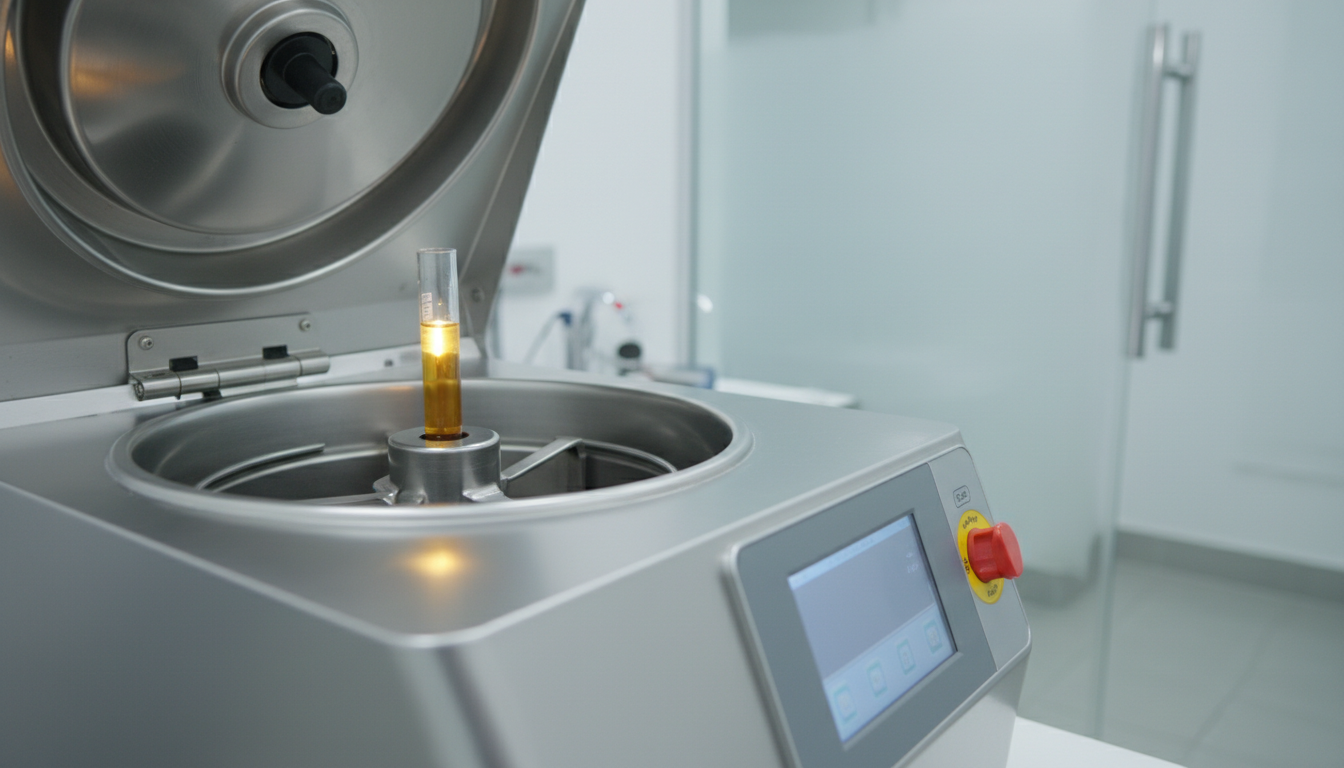
The collected blood is placed in a centrifuge, a device that spins the tubes at high speed to separate the blood into its component layers based on density. Red blood cells, which are heaviest, settle to the bottom. The platelet-poor plasma rises to the top. Between these layers sits the platelet-rich plasma, a thin golden band containing the concentrated platelets and their growth factors. The centrifugation process takes approximately 10 to 15 minutes, and the specific speed and duration are calibrated to produce an optimal platelet concentration.
Step 3: Preparation and Activation
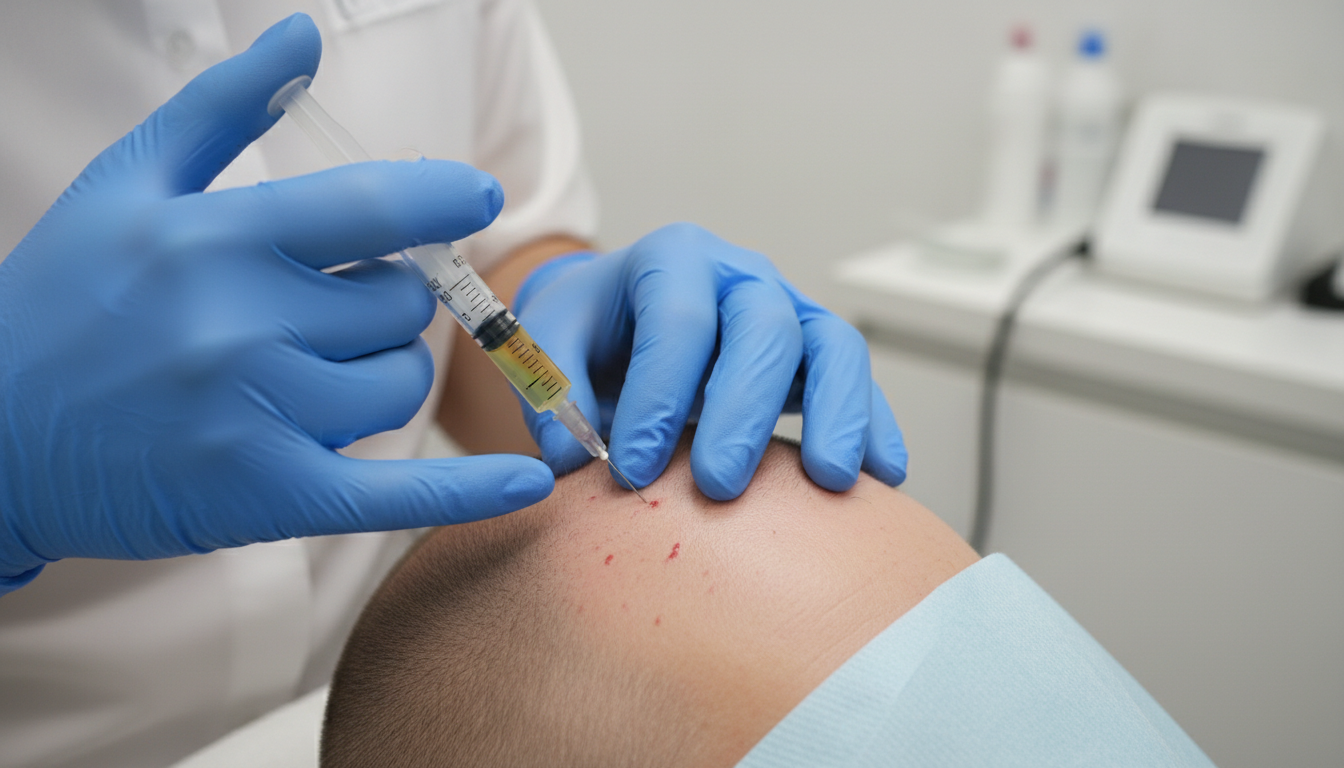
Once the centrifuge has completed its cycle, the PRP layer is carefully extracted from the tube using a syringe. Some protocols include an activation step, where calcium chloride or another agent is added to trigger the platelets to begin releasing their growth factors. Other protocols inject the PRP without activation, relying on the body's natural processes to activate the platelets once they are injected. Both approaches have demonstrated efficacy, and the choice often depends on the clinician's preference and the specific system being used.
Step 4: Scalp Injection
Before the injections begin, the scalp is thoroughly cleansed. A topical anesthetic or nerve block may be applied to minimize discomfort, though many patients tolerate the injections without anesthesia. Using a fine needle, the PRP is injected in a systematic grid pattern across the areas of thinning. Each injection delivers a small volume of PRP approximately one centimeter below the skin surface, directly at the level of the hair follicle bulge where stem cells reside. The entire injection process takes approximately 15 to 20 minutes, with the total number of injection sites typically ranging from 50 to 100 depending on the area being treated.
Treatment Schedule and Timeline
PRP therapy is not a one-time treatment. Optimal results require an initial series of sessions followed by periodic maintenance. A typical protocol at our clinic involves:
- Initial series: Three to four treatment sessions spaced four to six weeks apart. This loading phase builds up the concentration of growth factors in the scalp tissue and provides sustained stimulation to the follicles.
- Assessment: At three to six months after completing the initial series, clinical photographs and trichoscopic measurements are compared to baseline to evaluate response.
- Maintenance: Once a positive response is confirmed, maintenance sessions every six to twelve months help sustain the results. Without maintenance, the benefits of PRP gradually diminish as the growth factor levels return to baseline.
Most patients begin to notice reduced shedding within the first month or two. Visible improvement in hair density and thickness typically becomes apparent at three to six months, with continued improvement through 12 months. It is important to understand that PRP does not produce overnight results; the hair growth cycle operates on a timeline of months, and the follicles need sustained stimulation to shift from miniaturization back toward healthy growth.
PRP as a Standalone Treatment vs. Combined With Transplant
PRP can function effectively as both a standalone treatment and as a complement to hair transplant surgery. The right approach depends on your specific situation.
PRP as Standalone Therapy
For patients with early-stage hair thinning who are not yet candidates for or ready to pursue surgical restoration, PRP offers a meaningful way to slow progression and improve existing hair quality. It is particularly effective for:
- Women with diffuse thinning (Ludwig Grade I-II)
- Men with early Norwood stages (II-III) who want to preserve what they have
- Patients who prefer a non-surgical approach
- Patients who are using finasteride or minoxidil and want to enhance their results
PRP Combined With Hair Transplant
When used alongside FUE hair transplant surgery, PRP serves multiple purposes. Pre-operative PRP treatments can improve the health of the scalp environment before transplantation. Intra-operative PRP, where the concentrate is applied to grafts or the recipient area during surgery, may improve graft survival rates. Post-operative PRP sessions accelerate healing, reduce the shock loss of native hair that sometimes occurs after transplant, and help maintain the non-transplanted hair over the long term.
Many of our transplant patients choose to incorporate PRP into their ongoing maintenance plan, viewing it as an investment in protecting both their transplanted and native hair.
Who Is a Good Candidate for PRP?
The ideal PRP candidate has:
- Active miniaturization rather than complete follicle loss. PRP works by stimulating existing follicles. If the follicles are completely gone (as in advanced Norwood VI-VII baldness), there is nothing for the growth factors to act on. Patients with early to moderate thinning, where miniaturized follicles are still present, tend to see the best results.
- Realistic expectations. PRP is not a hair transplant. It will not recreate a full head of hair from advanced baldness. What it can do is improve the thickness and density of existing hair, slow progression, and complement other treatments.
- Commitment to the treatment schedule. The benefits of PRP require consistent treatment. Patients who complete only one or two sessions and then stop are unlikely to see meaningful results.
- No contraindications. Patients with blood disorders, active infections, certain autoimmune conditions, or those on anticoagulant therapy may not be suitable candidates. A thorough medical review is conducted before any PRP treatment.
What PRP Cannot Do
Honesty about limitations is as important as discussing benefits. PRP cannot:
- Regrow hair where follicles have been permanently destroyed or scarred
- Reverse advanced baldness to a full head of hair
- Replace the need for finasteride in men with aggressive androgenetic alopecia
- Produce identical results in every patient (individual biology affects response)
- Provide permanent results without ongoing maintenance sessions
Cost Considerations
PRP therapy is typically priced per session, with costs varying based on the preparation system used, the volume of PRP produced, and the extent of the treatment area. Because it is considered an elective cosmetic procedure, PRP is not covered by most health insurance plans. When evaluating cost, it is helpful to consider PRP in the context of a long-term hair maintenance plan rather than as an isolated expense. Many patients find that the combination of PRP with medical therapy provides a cost-effective way to delay or reduce the extent of eventual surgical restoration.
PRP therapy works best as part of a comprehensive strategy, not in isolation. When combined with appropriate medical therapy and, for many patients, eventual surgical restoration, it plays a valuable role in maintaining hair health over the long term.
What to Expect After Your Session
After a PRP session, most patients experience mild scalp tenderness and redness at the injection sites that resolves within 24 to 48 hours. There is no downtime; patients can return to work and most normal activities immediately. Strenuous exercise is typically avoided for 24 hours. Hair can be washed normally the day after treatment. There are no visible signs of treatment, making PRP an extremely discreet option for patients who want to keep their hair restoration efforts private.
If you are considering PRP therapy, whether as a standalone treatment or as part of a broader hair restoration plan, we encourage you to schedule a consultation. Our specialists will evaluate your hair loss pattern, assess whether you are a good candidate, and recommend a treatment protocol tailored to your specific needs and goals.
Related Articles
FUE vs FUT: Which Hair Transplant Method Is Right for You?
A detailed comparison of Follicular Unit Extraction and Follicular Unit Transplantation covering scarring, recovery, cost, and graft yield.
Understanding Male Pattern Baldness: Causes, Stages & Solutions
A clinical guide to androgenetic alopecia in men, covering the Norwood scale, genetic factors, and all available treatment options.

Hair Transplant Recovery Timeline: What to Expect
A week-by-week guide to hair transplant recovery, from the first 48 hours through the full 12-month growth cycle.
Schedule Your Free Consultation
Have questions about hair loss or treatment options? Our board-certified specialists are here to help.