Hair Transplant Recovery Timeline: What to Expect Week by Week
A detailed week-by-week breakdown of the hair transplant healing process, from day one through full results at 12-18 months.

One of the most common questions we hear from patients considering a hair transplant is straightforward: how long does recovery actually take? The honest answer is that hair transplant recovery is a marathon, not a sprint. While you will be back to most normal activities within a week or two, the full journey from surgery day to final results spans 12 to 18 months.
Understanding this timeline in advance removes much of the anxiety from the process. Whether you are considering an FUE hair transplant or a FUT hair transplant, the growth phases and healing milestones are remarkably similar. The key difference is in the donor area recovery, but the transplanted grafts themselves follow the same biological clock regardless of extraction method.
Below is our comprehensive week-by-week guide based on more than two decades of clinical experience and thousands of successful procedures at our Bellevue clinic.
Days 1 Through 3: The Immediate Post-Op Phase
The first three days after your procedure are the most critical in terms of graft protection. During this window, the transplanted follicles are settling into their new recipient sites and have not yet formed a strong bond with the surrounding tissue. Everything you do during these 72 hours should be oriented toward keeping the grafts undisturbed.
What You Will Experience
Immediately after surgery, your scalp will be covered with tiny crusts at each graft site. These crusts are a mixture of dried blood and lymphatic fluid, and they serve as a natural protective barrier. The recipient area may look red and dotted, which is entirely normal. You may also notice mild oozing of clear or pink fluid during the first night.
Numbness in the transplant zone is common and expected. The local anesthesia used during surgery takes several hours to fully wear off, and some residual numbness can persist for weeks or even months as the tiny nerve endings heal. Mild to moderate pain or tightness across the scalp is typical once the anesthesia fades, but it is well controlled with the prescribed pain medication.
Swelling often begins on day two or three, typically starting at the forehead and sometimes extending down to the brow area and around the eyes. This swelling is caused by the tumescent fluid used during the procedure as it migrates downward with gravity. It is completely harmless and resolves on its own within a few days.
What Is Normal vs. What Is Not
- Normal: Pinkish oozing the first night, mild pain controlled by medication, some swelling of the forehead, tingling or numbness in the scalp.
- Call your doctor if: You experience heavy or persistent bleeding that soaks through bandages, a fever above 101 degrees Fahrenheit, severe pain unresponsive to prescribed medication, or signs of infection such as increasing redness with warmth and pus.
Tips for Days 1 Through 3
- Sleep with your head elevated at a 45-degree angle to minimize swelling.
- Avoid touching, scratching, or rubbing the recipient area.
- Take all prescribed medications on schedule, including antibiotics, anti-inflammatories, and pain relievers.
- Stay hydrated and eat nutrient-rich foods to support healing.
- Apply ice packs to the forehead (never directly on the grafts) in 20-minute intervals to reduce swelling.
For a more detailed hour-by-hour guide to this critical window, see our companion article on post-op care during the first 48 hours.
Week 1: Early Healing and Scabbing
By the end of the first week, the tiny crusts around each graft will begin to loosen and fall off naturally. Most clinics will instruct you to begin a gentle washing routine around day three to five to help soften and remove these scabs. Follow your surgeon's specific instructions carefully, as the washing technique matters.
The redness in the recipient area will still be quite visible during week one. The donor area, whether harvested via FUE or FUT, will also be in active healing. FUE patients will have many tiny dot-shaped scabs across the donor zone, while FUT patients will have a linear incision covered by sutures or staples.
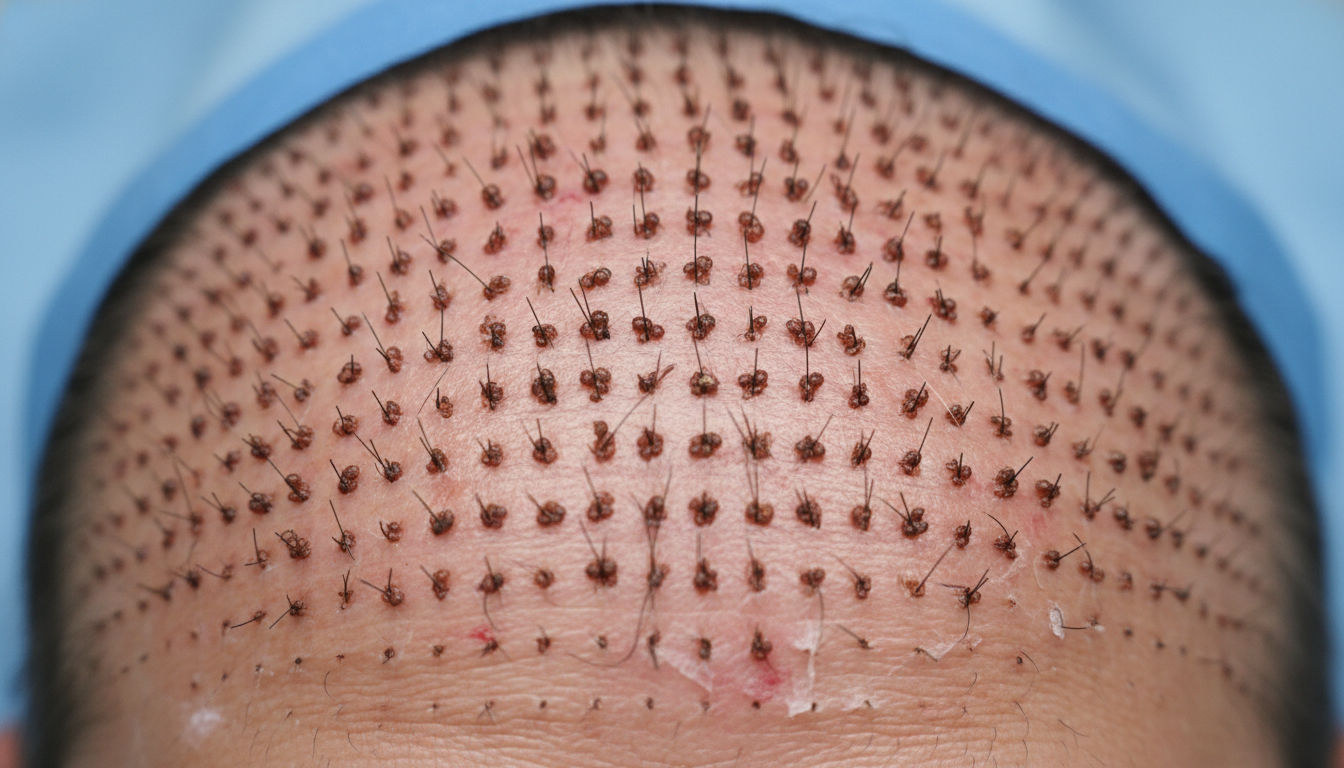
Most patients can return to desk work within five to seven days, though some prefer to take the full week off if their job involves public-facing interactions. The scabbing and redness are noticeable at close range, and wearing a hat is not recommended during the first week because it can dislodge grafts.
Week 1 Tips
- Follow the prescribed gentle hair-washing routine exactly as instructed.
- Do not pick at or pull off scabs, even if they feel loose.
- Avoid any strenuous physical activity, bending over, or heavy lifting.
- Continue sleeping elevated to manage residual swelling.
- Stay out of direct sunlight. If you must go outdoors, use a loose, clean hat starting around day seven with your doctor's approval.
Week 2: Scab Removal and the Ugly Duckling Phase Begins
During the second week, all of the crusts and scabs should come off through your daily washing routine. Once the scabs are gone, the recipient area will look pink and may appear somewhat bare. The transplanted hairs are still present at this stage, but they are very short and thin.
By the end of week two, many patients notice that the transplanted hairs begin to shed. This is the start of what we call the "ugly duckling phase" or "shock loss," and it is one of the most psychologically challenging parts of recovery. The shedding is not a sign that the procedure has failed. It is a completely normal and expected part of the hair growth cycle.
What is actually happening is that the hair shaft is being shed while the follicle itself remains safely anchored beneath the skin. The follicle will enter a resting phase before producing a new, permanent hair. Think of it as the old hair falling out to make room for the new growth that will emerge in the coming months.
"The shedding phase is where patience becomes your greatest asset. Every hair that falls out during weeks two through four is making way for the strong, permanent growth that will follow. Trust the process."
Weeks 3 Through 4: Shock Loss and the Resting Phase
By weeks three and four, most of the transplanted hair shafts will have shed. The recipient area may look similar to how it appeared before the procedure, or in some cases slightly worse due to temporary thinning of surrounding native hairs that were disturbed during surgery. This native hair shock loss is usually temporary and those hairs will grow back within a few months.
The donor area will be well on its way to full recovery at this point. FUE dot scars will have faded significantly and are typically covered by surrounding hair. FUT patients usually have their sutures or staples removed around the 10 to 14 day mark, and the linear scar will begin to mature and fade.
This is also the stage where the grafts are considered fully secure. The risk of graft dislodgement is essentially zero after three weeks, so you can resume wearing hats, sleeping in any position, and gently touching the scalp without concern.
What to Expect
- The transplanted area may look the same or slightly thinner than before surgery.
- Redness continues to fade gradually.
- Any numbness typically starts to diminish but may persist for several more weeks.
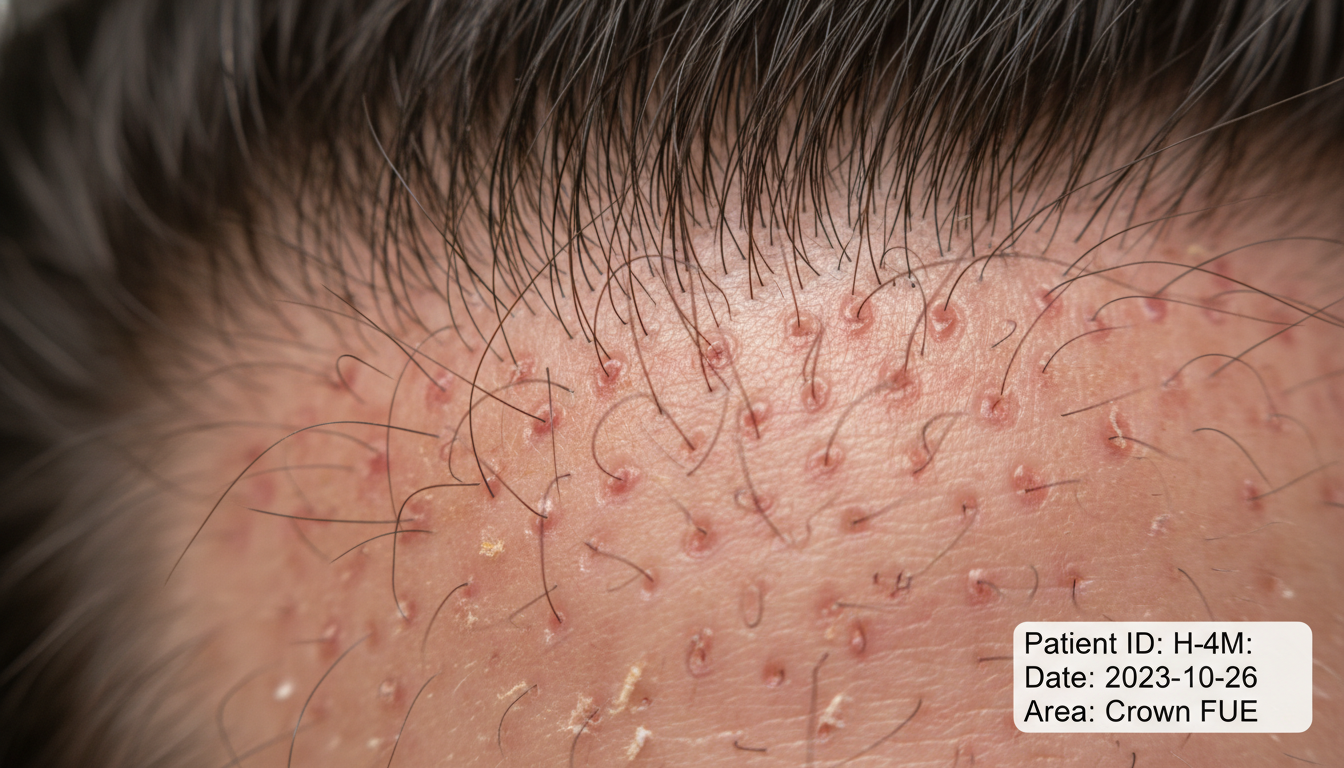
- You may notice small pimple-like bumps in the recipient area. These are ingrown hairs trying to push through and are completely normal.
Months 2 Through 3: The Waiting Game
Months two and three are often the most difficult psychologically because there is very little visible change. The follicles are in their telogen (resting) phase, preparing to shift into the anagen (active growth) phase. The scalp surface will look largely healed, with most redness subsided, but new hair growth has not yet appeared.
This is the period where many patients question whether the procedure worked. We reassure every one of our patients that this dormancy is a fundamental part of the biological growth cycle. The follicles are alive and well beneath the surface, redirecting energy toward building the structures that will produce strong, healthy hair shafts.
Tips for Months 2 Through 3
- Focus on maintaining a healthy diet rich in protein, iron, zinc, and biotin.
- Follow any maintenance medication protocols prescribed by your surgeon, such as finasteride or minoxidil.
- Protect the scalp from prolonged sun exposure with SPF or a hat.
- Avoid comparing your results to others at this stage, as growth rates vary considerably between individuals.
Months 4 Through 6: Early Growth Appears
This is the stage where excitement begins to build. Around month four, you will start to notice fine, thin hairs emerging from the transplanted follicles. These early hairs are often wispy, light in color, and somewhat uneven. They do not yet represent the final texture or density of your results.
By month five and six, the growth becomes more noticeable. Approximately 30 to 40 percent of the transplanted hairs will be visible, though they will still be thinner than their final caliber. Many patients report that friends and family start to notice a positive change around the five to six month mark, even though the full results are still months away.
The existing native hair that may have experienced shock loss will also be regrowing during this period, contributing to an overall improvement in density. Patients who are using adjunctive treatments like FUE maintenance protocols or PRP therapy often see enhanced growth during this phase.
Common Observations at Months 4 Through 6
| Timeframe | Approximate Growth | Hair Characteristics |
|---|---|---|
| Month 4 | 15-20% of final density | Fine, thin, wispy; may be lighter in color |
| Month 5 | 25-35% of final density | Beginning to thicken; more consistent coverage |
| Month 6 | 35-45% of final density | Noticeably filling in; starting to look like real coverage |
Months 6 Through 9: Significant Improvement
The period from six to nine months is when most patients feel genuinely happy about their decision. Growth accelerates, hair shafts thicken, and the transplanted area begins to blend much more naturally with the surrounding native hair. You are typically seeing 50 to 70 percent of your final result during this window.
The texture of the new hair often matures during this stage. Hairs that initially grew in straight may develop their natural curl or wave pattern. Color may also deepen to match the rest of your hair as the melanin production in the follicle normalizes.
Many patients find that they can begin styling their hair in new ways during this period. Where a comb-over or strategic styling was once necessary to conceal thin areas, the new growth provides enough coverage to wear the hair more naturally.
Months 6 Through 9 Tips
- You can now use regular hair products, including gels, pomades, and styling sprays.
- Continue any prescribed maintenance medications to protect native hair.
- If you have not already, schedule a follow-up visit with your surgeon to assess progress.
- Be patient with any uneven patches. Different areas of the scalp often grow at different rates.
Months 12 Through 18: Final Results
The full and final result of a hair transplant is typically visible between 12 and 18 months after the procedure. By month 12, approximately 80 to 90 percent of the transplanted hairs have grown in and reached their mature thickness. The remaining 10 to 20 percent may continue to refine and thicken through month 18.
At this stage, the transplanted hair is permanent. It behaves exactly like the hair in the donor area where it originated, meaning it is genetically resistant to the hormone DHT that causes pattern hair loss. You can cut it, style it, color it, and treat it like any other hair on your head.
We recommend a final follow-up appointment around the 12-month mark to evaluate overall density, discuss whether a secondary procedure might be beneficial for additional density, and review your long-term maintenance plan.
Final Results Summary
| Milestone | Timeframe | What to Expect |
|---|---|---|
| Grafts secure | 2-3 weeks | Grafts fully anchored; scabs gone |
| Shock loss complete | 3-4 weeks | Transplanted hairs shed; follicles dormant |
| First new growth | 3-4 months | Fine hairs begin to emerge |
| Noticeable improvement | 5-6 months | 35-45% of final density visible |
| Major improvement | 8-10 months | 60-80% of final density; hair thickening |
| Final result | 12-18 months | Full density and mature hair texture achieved |
Factors That Influence Your Recovery Timeline
While the timeline above represents the typical progression, individual results can vary based on several factors:
- Age and overall health: Younger, healthier patients tend to heal faster and may see growth slightly earlier.
- Smoking status: Smoking constricts blood vessels and significantly impairs healing. We strongly recommend quitting at least two weeks before and after surgery.
- Nutritional status: Adequate protein, vitamins, and minerals are essential for hair follicle function. Deficiencies in iron, zinc, biotin, or vitamin D can slow growth.
- Procedure type: FUE and FUT procedures have similar graft growth timelines, but donor area healing differs. FUE donor sites heal within one to two weeks, while FUT linear scars may take three to four weeks to fully close.
- Number of grafts: Larger sessions may involve slightly more swelling and a longer initial healing period, but the growth timeline remains the same.
- Adherence to post-op instructions: Patients who follow their care instructions closely consistently achieve the best outcomes.
When to Contact Your Surgeon
Throughout your recovery, keep in close contact with your surgical team. While most symptoms are normal and expected, certain signs warrant a phone call:
- Fever above 101 degrees Fahrenheit that persists for more than 24 hours.
- Increasing pain, redness, or swelling in the donor or recipient area after the first week.
- Discharge of pus or foul-smelling fluid from any incision site.
- Any graft that appears significantly displaced or dislodged during the first two weeks.
- Persistent numbness or tingling that worsens rather than improves over time.
At Bellevue Hair Doctor, we provide every patient with a direct line to our post-operative care team. We believe that peace of mind during recovery is just as important as the surgical technique itself.
The Bottom Line
Hair transplant recovery is a gradual process that rewards patience. The initial weeks involve protecting your grafts and allowing the surgical sites to heal. The middle months require trusting the process during the dormant and early growth phases. And the final months deliver the transformation that makes the entire journey worthwhile.
By understanding what to expect at each stage, you can move through recovery with confidence and realistic expectations. If you have questions about any phase of the recovery process or want to discuss whether a hair transplant is right for you, our team at Bellevue Hair Doctor is here to help every step of the way.
Related Articles

Post-Op Care: The Critical First 48 Hours After Hair Transplant
Everything you need to do in the first two days after surgery to protect your grafts and set the stage for optimal healing.

How to Sleep After a Hair Transplant: Positions, Pillows & Tips
The correct sleeping positions, pillow setups, and nighttime routines to protect your grafts during the critical first two weeks.

When Can You Exercise After a Hair Transplant?
A safe timeline for returning to workouts, cardio, and weight training after your hair restoration procedure.
Schedule Your Free Consultation
Have questions about your recovery or considering a hair transplant? Our board-certified specialists are here to help.